
HYDERABAD: Once a migrant labourer struggling to survive, Manik Murmu today stands as a quiet symbol of the revival of India’s fading handloom traditions. A member of the Santhal tribe from Purulia in West Bengal, Manik is now a trained hand-spinner and weaver, drawing fellow villagers back to sustainable livelihoods after years of forced migration.
Murmu is among the artisans at the Exclusive Natural Dye Handmade Festival, which opened on Friday at CCT spaces in Hyderabad. The three-day event, organised by the India Handmade Collective, showcases desi cotton that is hand-spun, hand-woven and naturally dyed, with a strong emphasis on eco-friendly textile practices. “Earlier, I worked as a migrant labourer. An activist taught us spinning and weaving for two or three days. After he left, I kept practising,” Manik tells TNIE. “Slowly, my hands learnt the work. Then I began teaching others.”
Today, two men and 25 women in his village earn their livelihood through hand-spinning and weaving, even as many others continue to migrate for labour.
Manik’s journey has inspired confidence across the community. “His transformation from migrant labourer to artisan shows how handloom can restore dignity and livelihoods,” says Arup Rakshit, founder-director of the Mahatma Gandhi Gramodyog Sewa Sansthan Foundation, which has been training tribal artisans in hand-spinning, hand-weaving and natural dyeing over the past three years. As part of the initiative, indigo cultivation has also been revived in Purulia.
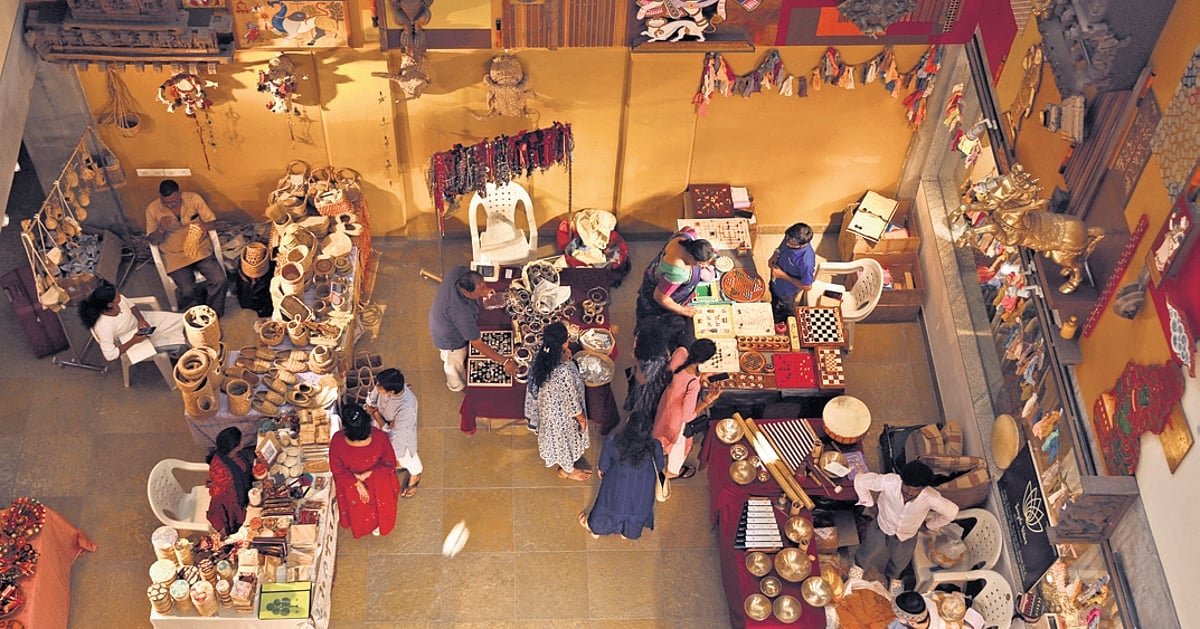
Meanwhile, the exhibition features stalls by 20 to 25 artisans from across the country, displaying products made entirely by hand. These range from naturally dyed dresses and sarees to tops and trousers, along with reusable bindis, chemical-free scrubs, terracotta jewellery, coconut shell crafts, reed-woven baskets, metal artefacts, wooden toys and sustainable home décor. Techniques on display include ecoprinting, batik, Kalamkari and Lambadi embroidery.