
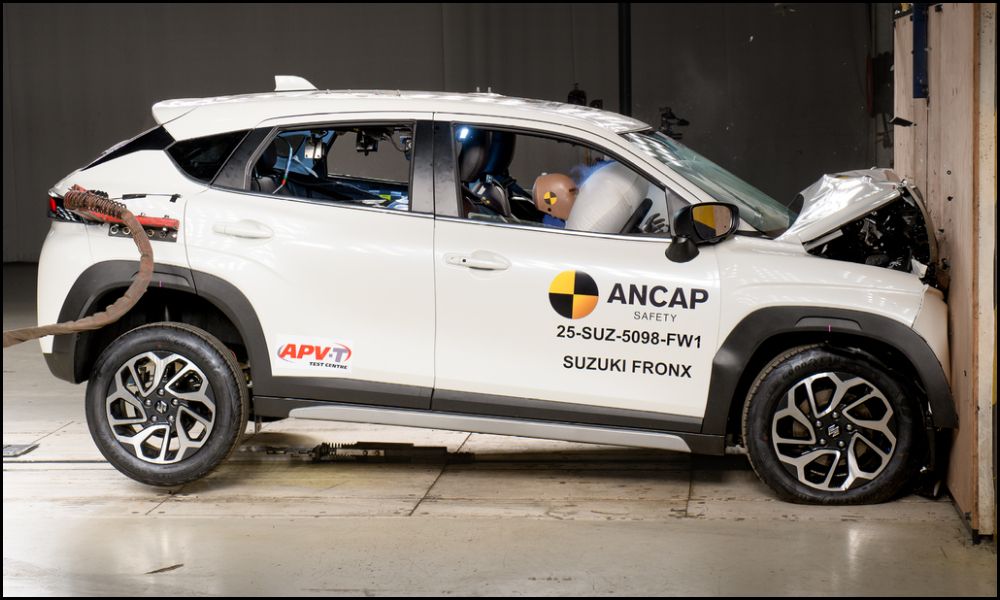
The Australasian New Car Assessment Program (ANCAP) has published the crash test results of the Suzuki Fronx, giving the car a disappointing one-star rating. This is in sharp contrast to the ratings it received in Japan NCAP and ASEAN NCAP earlier this year, where it received 4-star and 5-star ratings respectively. The subcompact SUV scored less than 50% in both adult and child protection, although it had much better scores in the assessment of safety and security systems for vulnerable road users.
Safety of adult passengers: 19.30/40 points (48%)
ANCAP found that in frontal offset impact testing, the Fronts provided weak to marginal protection for adult front seat passengers. However, head and pelvis protection was rated as good. In the full-width barrier impact test, driver chest protection was weak, while head and abdominal protection was good.
However, the full-width frontal impact test revealed one notable flaw with the vehicle – the rear seat belts. ANCAP found that the rear seat belts unbuckled during the test, resulting in a failure to control the forward motion of the rear seat passenger, resulting in inadequate chest and head protection, and thus received zero points for rear adult passenger protection and zero points in the full-width impact test.
Also read: Maruti Suzuki Celerio gets 3-star safety rating in Global NCAP crash test
The results were good in rear and side pole crash tests, with adult occupants receiving moderate to good protection. ANCAP also said that side collision tests were not conducted due to the absence of a center airbag for the front seat passengers.
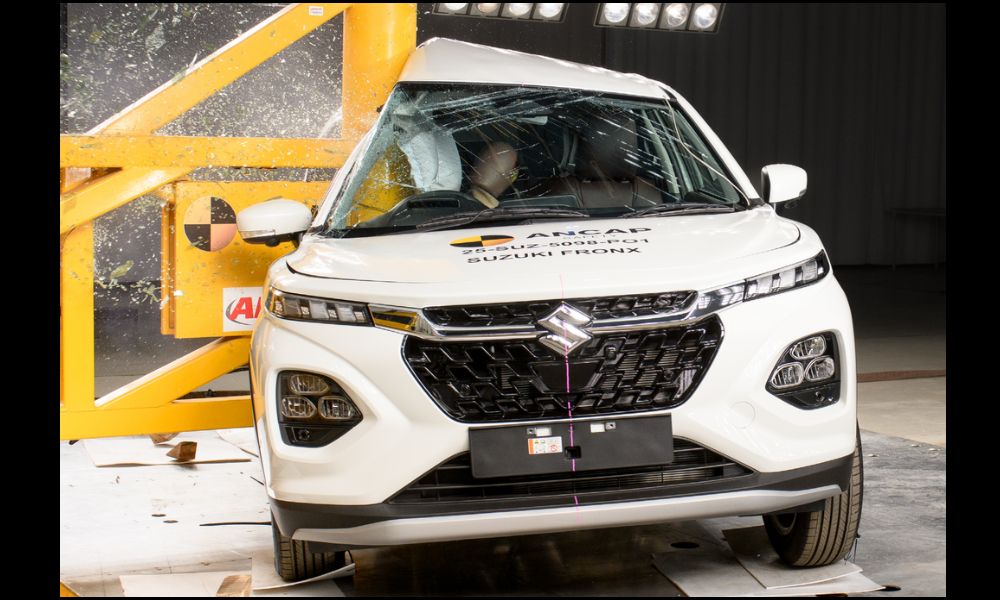
“Seatbelt malfunction is a rare and serious occurrence. ANCAP aims to provide consumer confidence, and when our testing reveals results like this, we act in their best interest by sharing our findings promptly and transparently. We are concerned that this vehicle could have been purchased by an ordinary consumer, and in a road accident, this defect could have resulted in serious consequences for the rear seat occupant. ANCAP believes that unless the defect is detected “Adults and children should not travel in the rear seats of Suzuki forwarders until the cause is determined and appropriate corrections are made,” said Carla Horweg, ANCAP Chief Executive Officer.
Child Safety: 20.06/49 points (40%)
Franks also performed poorly in terms of child safety. ANCAP found that the lack of seatbelt pretensioners in the rear seats could have resulted in children not being properly protected during a collision. In head-on collision testing, head protection for both the 10-year-old and 6-year-old dummies was poor, while chest protection was mediocre and weak.
In side impact testing, chest protection was good, although the safety agency reported that the head of the 6-year-old dummy collided with the CRS meant for the 10-year-old dummy, resulting in poor head protection.
Road user protection: 41.39/63 points (65%)
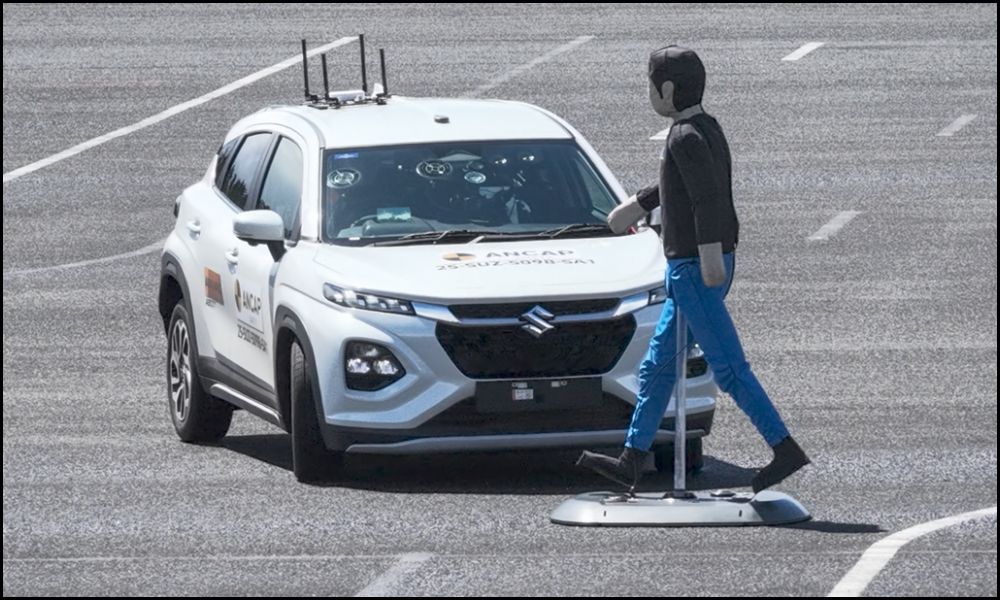
ANCAP found the Front’s bonnet and windscreen to provide good to adequate protection for pedestrians’ heads. This protection level drops to moderate to poor around the rigid A pillar section, while the road user’s abdominal and femur protection is poor. Lower leg protection was rated good.
The Fronx’s automatic braking system also performed satisfactorily when tested with pedestrians, cyclists and motorcyclists. However, the safety body found that the AEB system does not react to other road users behind the vehicle.
Security Systems: 10.03/18 points (55%)
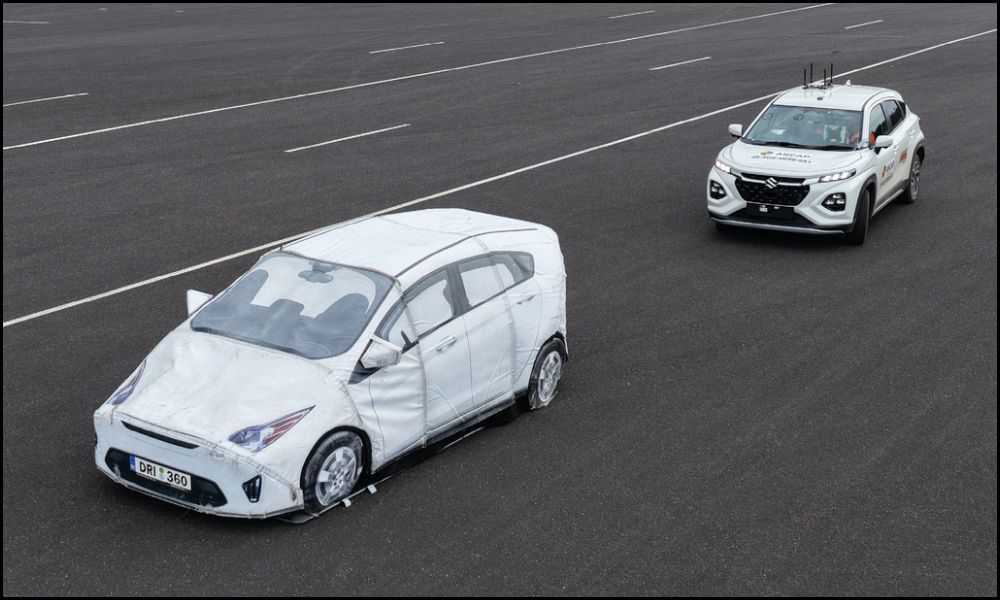
ANCAP found that in the event of a head-on or intersection collision, the autonomous braking system (car-to-car) performed well and in most cases avoided or reduced the impact of the collision. However, the organization also said that the autonomous braking system of the FrontX does not have the facility for head-on collision. Lane keep assist functions also work well, and although the car has seatbelt reminders for all passengers, there is no passenger detection system in the middle rear seat.