
What’s the story
After years of planning and development, NASA is gearing up for a major milestone in space exploration.
The Artemis II mission, scheduled for early 2026, will be the first crewed journey into deep space in over half a century.
This historic flight would mark humanity’s return beyond low-Earth orbit since Apollo 17 in 1972.
Artemis II: A test run for future lunar missions
The Artemis II mission is a key part of NASA’s larger Artemis program, which was first unveiled in 2017.
The ultimate goal of this ambitious initiative is to return astronauts to the Moon and eventually establish a permanent human presence there.
However, before that can happen, NASA needs to demonstrate that its new spacecraft and launch systems can safely transport humans through deep space.
A diverse crew for the historic journey
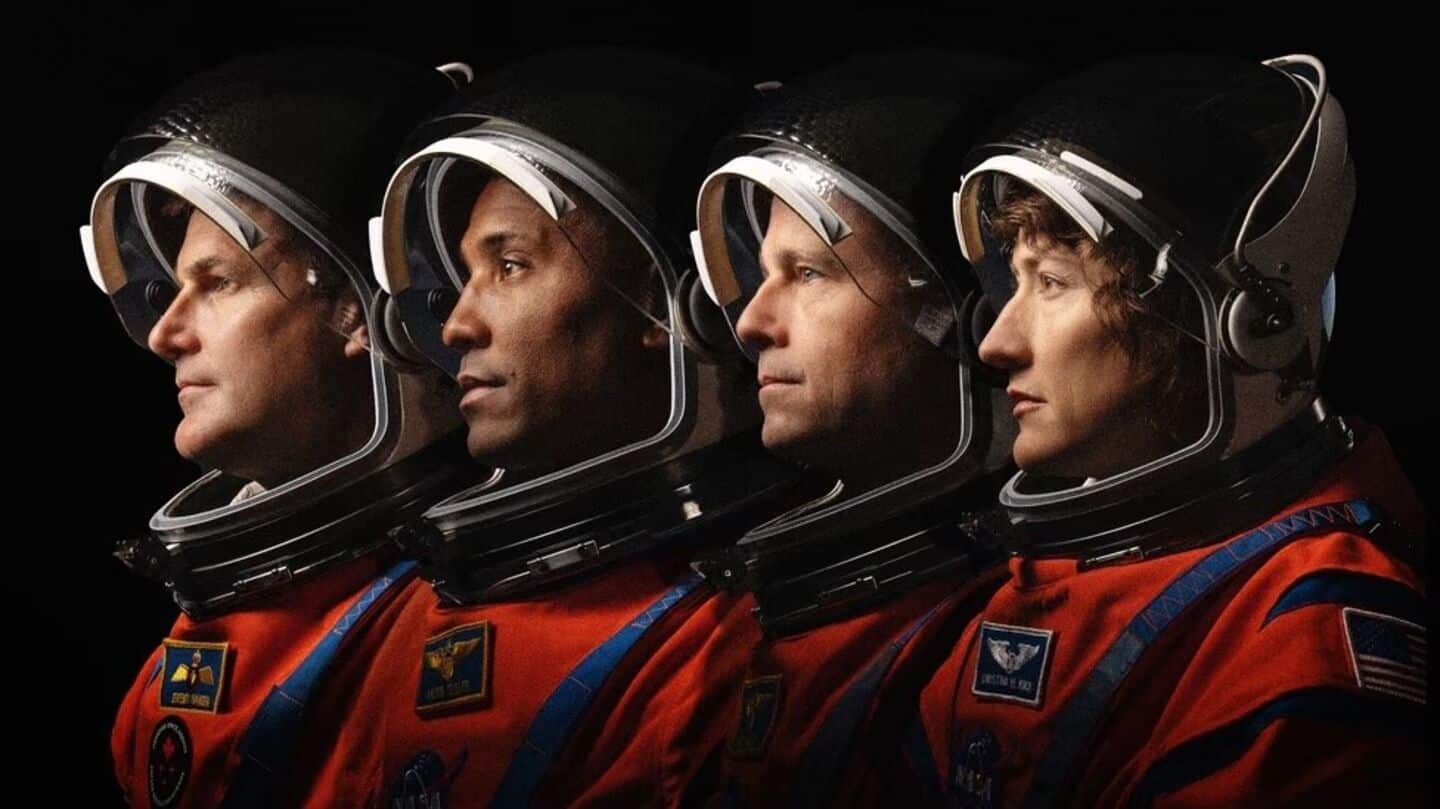
The Artemis II mission will carry four astronauts: NASA’s Reid Wiseman, Victor Glover, Christina Koch, and Canadian astronaut Jeremy Hansen.
The 10-day journey will take them around the Moon before bringing them back to Earth.
Although they won’t land on the lunar surface, they’ll travel farther from our planet than any humans have in over 50 years.
Orion spacecraft: A test of modern systems
The Artemis II mission will also be a test run for the Orion spacecraft, which is designed to support astronauts in deep space, protect them from radiation, and survive a fiery reentry into Earth’s atmosphere.
Unlike Apollo missions that relied on hardware developed and flown quickly, Artemis is built on modern systems with relatively little real-world use.
Communication blackouts and radiation exposure
During its closest approach to the Moon, Artemis II will pass behind the lunar far side, cutting off communications with Earth for some 45 minutes.
They will also be exposed to higher levels of radiation than those on the International Space Station as they venture beyond Earth’s magnetic field’s partial protection.
Biological data collection during Artemis II flight
NASA plans to collect a wealth of biological data during the Artemis II flight, including monitoring the crew’s sleep, cognition, stress levels, immune response and cardiovascular health.
Small samples of human tissue will also be sent along to help researchers understand how our bodies respond to deep space conditions.
“The science of Artemis is the science of us,” said Jacob Bleacher, NASA’s chief exploration scientist.
Artemis II: A stepping stone for future lunar missions
The Artemis II mission will launch aboard NASA’s Space Launch System from Kennedy Space Center.
Both Orion and SLS successfully flew during the uncrewed Artemis I mission in 2022, but this will be their first real test with humans on board.
If successful, it will set the stage for Artemis III, which aims to land astronauts near the Moon’s south pole later this decade.