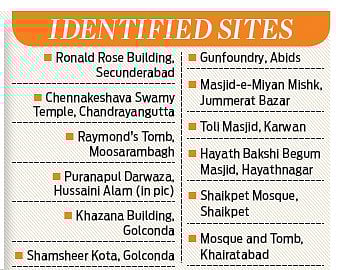
HYDERABAD: A dozen historical buildings and monuments in the city have been identified for conservation, adaptive reuse and site development. The Municipal Administration department has proposed preparing a vision for their new use — such as museums, cultural centres or public spaces — that balances community needs with heritage preservation.
Hyderabad, with its rich history and diverse heritage, has earlier witnessed successful adaptive reuse projects at Bansilalpet Stepwell, MJ Market and Falaknuma Palace, officials said, adding that the upcoming plan seeks to similarly transform underutilised structures into functional spaces.
The Quli Qutub Shah Urban Development Authority (QQSUDA) will engage an agency to prepare the DPRs. The agency must conduct site assessments, document historical significance, engage stakeholders, and design conservation and reuse strategies that incorporate sustainability. The DPRs should cover project management, physical conservation, design for new uses, historical context, financial feasibility, and scope for visitor-friendly features like museums.
Officials noted that adaptive reuse extends the life of heritage structures by giving them new functionality while preserving cultural values. It is more cost-effective than new construction, enhances property value, attracts tourism and safeguards architectural character. Conservation, adaptive reuse, and site development together aim to revitalise heritage sites by preserving significance, enabling contemporary use, and embedding them in a sustainable urban environment.