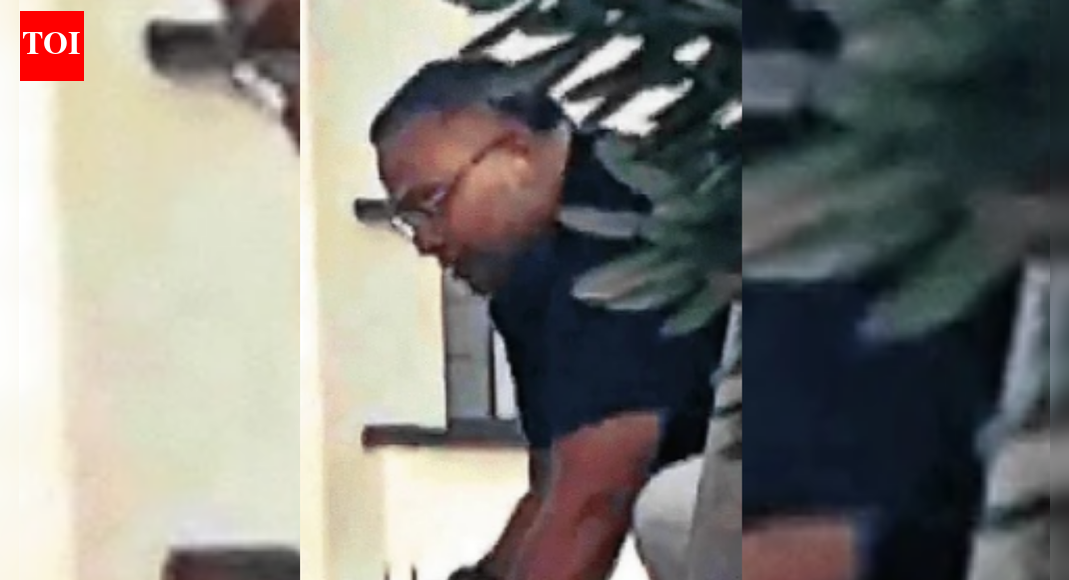
HYDERABAD: As investigations deepens into the deadly Bondi beach attack in Sydney, Telangana Police and intelligence agencies have pieced together a detailed timeline of visits made to India by shooter Sajid Akram, concluding that his trips to Hyderabad over the years were personal in nature and largely centred on family and property matters. Officials from the intelligence wing said Sajid, an Indian passport holder who migrated to Australia in 1998, visited Hyderabad six times over more than two decades. His first return was in 2001, when he brought his Australian wife of Italian descent, Venera Grosso, to introduce her to his parents. The couple also performed a traditional nikah during that visit. Sajid came again in 2004 to introduce his son Naveed to the extended family. When his father died in 2009, he could not attend the funeral but arrived in Hyderabad about a month later to meet relatives, police said.
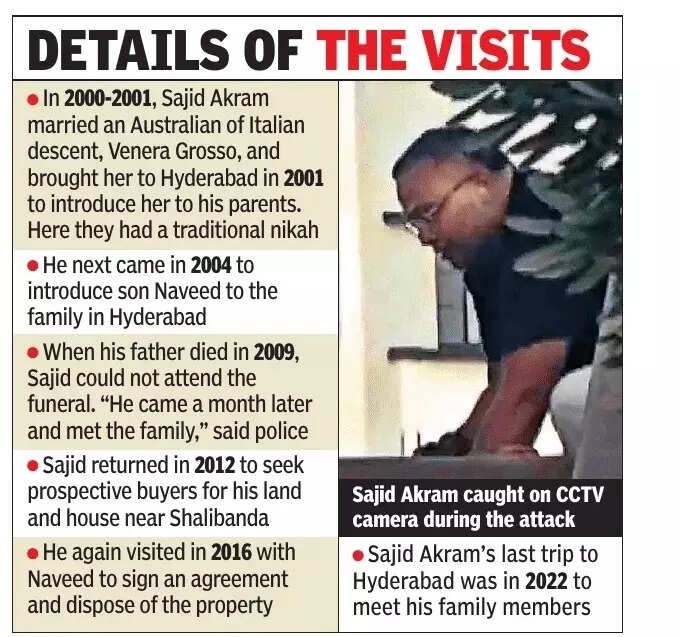
Subsequent visits in 2012 and 2016 were linked to property matters. During these trips, Sajid explored buyers for ancestral land and a house near Shalibanda and later signed agreements to dispose of the property, accompanied on one occasion by his son. His last visit was in 2022, when he stayed for about two weeks at his family home in Al Hasnath Colony, Toli Chowki. A senior officer said Sajid largely remained indoors during that stay, spending time with close family members. Telangana police said they scrutinised these visits to establish whether there was any suspicious activity or overseas linkage. “Our verification shows the visits were short and personal. There is no evidence to suggest he travelled to Pakistan or met anyone outside his immediate family,” an intelligence official said, adding that Sajid was not on the radar of Indian security agencies.“His visits were short. Each time he stayed for about a week or 10 days. In 2022, he stayed for a fortnight at Al Hasnath Colony. He remained in the house and spent time mostly with his mother and sister,” said a senior police official. Police also said Sajid had been trying unsuccessfully to obtain Australian citizenship for several years and last renewed his Indian passport in 2022. Australian Security Intelligence Organisation (ASIO) had examined Naveed in 2019 over suspected links to a local Islamic State cell in Sydney but later cleared him as not an imminent threat, officials noted. Members of the Indian community in Australia distanced themselves from the accused. Leaders of community organisations said Sajid and Naveed were not known within established associations and appeared to live in isolation.Speaking to TOI from Sydney, Muhammad Arshad Khan, chairman of the Indian Muslim Association of Australia, said that despite being actively involved in the community for decades, he had never encountered the accused or their family.“I migrated here in Feb 1998 and have been part of the community since. But I had never heard of them [before the attack]. They are not even registered with us,” said Khan, adding, “Such people always live in isolation. We condemn this and stand with our fellow Australians.”On December 16, the Telangana police confirmed that Sajid was originally from Hyderabad and migrated to Australia 27 years ago.At the same time, several groups announced support initiatives for victims, including blood donation drives in coordination with Australian authorities. Telangana Police said there was no adverse record against Sajid during his time in India before he left for Australia and that preliminary findings suggest any radicalisation of the father-son duo occurred overseas. Further details, including their reported travel to the Philippines shortly before the attack, are being investigated by Australian agencies.