Earlier today, Samsung announced its next-generation flagship smartphone chip, the Exynos 2600. It is the world’s first 2nm smartphone chip and promises improved AI, CPU, GPU, and camera performance. However, will it end overheating and performance throttling issues found in previous Exynos chips?
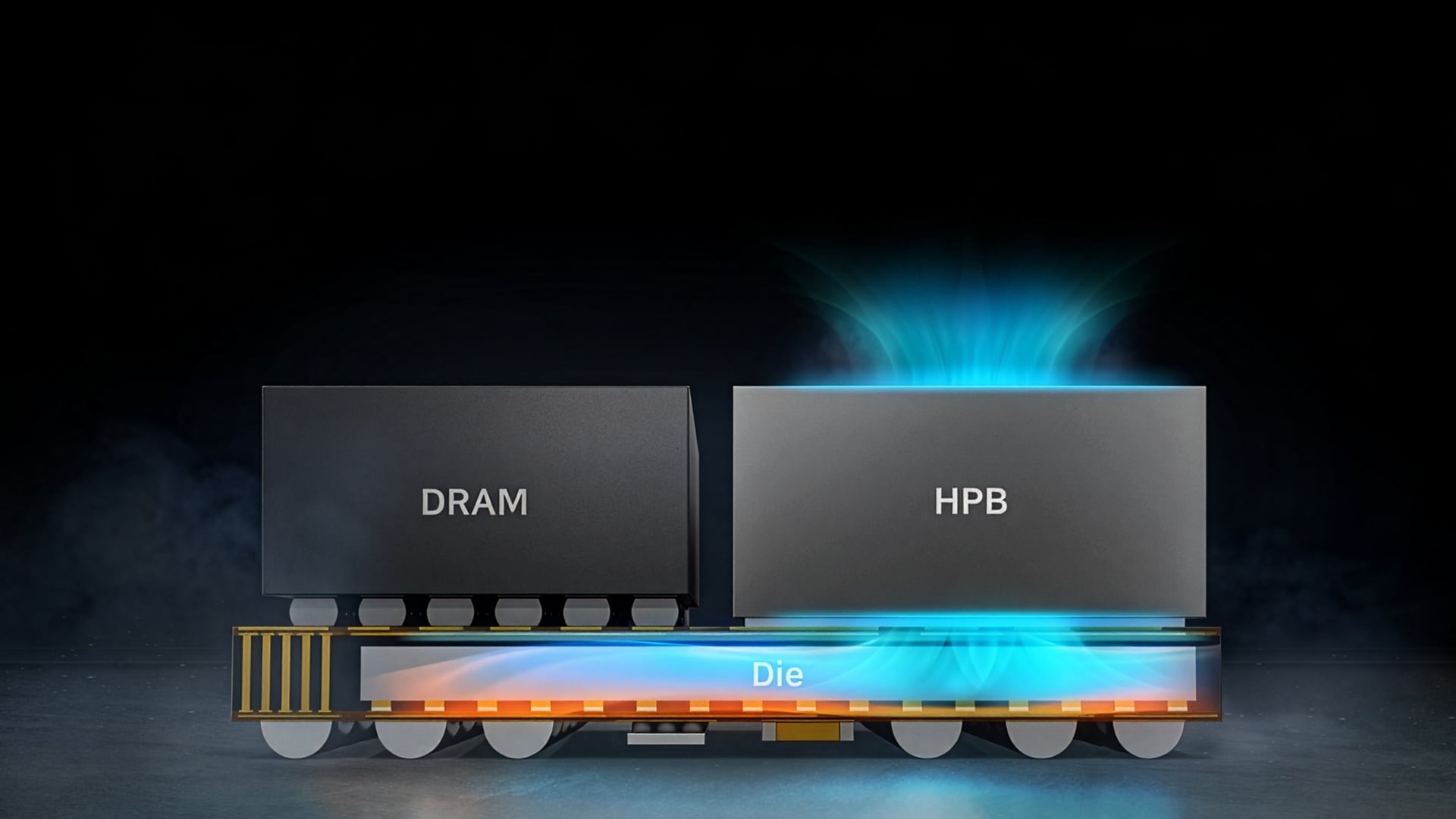
Samsung Foundry’s 2nm GAA process, which is used to fabricate the Exynos 2600, is projected to be 25-30% more power-efficient compared to the company’s 3nm GAA process that was used for the Exynos 2500. Besides a more power-efficient fabrication process, Samsung says the Exynos 2600 uses an industry-first technology called Heat Path Block (HPB) that improves heat dissipation.
What is Heat Path Block technology in Exynos 2600?

According to Samsung, the HPB technology uses a High-Kappa Epoxy Molding Compound (EMC) material, which optimizes the heat-transfer path to dissipate heat more efficiently. You can think of it as a copper-based heat sink integrated directly within the chip’s package on top of the processor to improve heat dissipation.
It should theoretically allow the Exynos chip to sustain high performance even in limited space available in compact phones. Samsung claims that HPB lowers the thermal resistance by up to 16% compared to the Exynos 2500.

The Xclipse 960 GPU, which is likely based on AMD’s RDNA4 architecture, offers up to 50% improved ray-tracing performance and up to 2x compute performance compared to the Exynos 2500’s Xclipse 950 GPU. The GPU also uses the Exynos Neural Super Sampling (ENSS) technique, which uses AI to upscale and generate frames for smoother gaming. So, the GPU doesn’t have to work as hard as previous GPUs, resulting in lower heat.
Samsung’s 2nm (SF2) process node is expected to be on par with TSMC’s third-generation 3nm (N3P) node in terms of transistor density. Moreover, Samsung claims it has optimized each Intellectual Property (IP) block, such as the CPU, GPU, ISP, and NPU, inside the Exynos 2600 for optimized power consumption.
Exynos 2600 lacks a built-in 5G modem, resulting in lower heat generation

The Exynos 2600 is also Samsung’s first Exynos chip in years to not have an integrated 5G modem. It also lacks built-in Bluetooth, Wi-Fi, GPS, UWB, and NFC connectivity. All those connectivity options will likely be built into a separate chip that the Galaxy S26 series will use. This should make the Exynos 2600 less complicated, resulting in lower heat generation.
Considering the newer technologies and Samsung’s focus on optimized performance and power efficiency, it appears that Exynos 2600 won’t have overheating and performance throttling issues seen in some previous Exynos chips like the Exynos 990 and the Exynos 2200. It could be on par with flagship rival chips from Apple, MediaTek, and Qualcomm in terms of power efficiency and heat dissipation.