

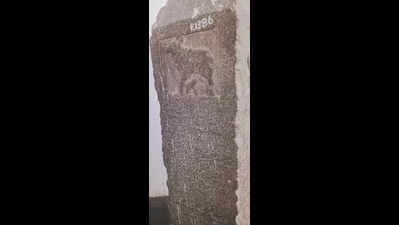
Hyderabad: What has long been believed to be a 19th century tradition born out of a plague-era vow now finds its roots in the early 16th century, reshaping the cultural timeline of Telangana’s most iconic festival.The Archaeological Survey of India’s epigraphy division has traced the origins of the Bonalu festival to 1516 CE, challenging the widely accepted view that it emerged during the early 1800s. ASI officials say they have identified a Telugu inscription from the reign of Vijayanagara ruler Krishnadevaraya that clearly records Bonalu and associated folk rituals, indicating that these practices were already well established centuries earlier.According to K Muniratnam Reddy, director (epigraphy), ASI, the earliest epigraphical reference to Bonalu in Telangana was found in an inscription originally from Gobbur, a border region between present day Hyderabad and Karnataka. The stone inscription, now preserved at the State Archaeology Museum in Hyderabad, is dated Sunday, May 4, 1516 CE. “This inscription gives the earliest epigraphical reference to the Bonalu festival in Telangana state,” he said. Exemption of taxesThe inscription records the exemption of taxes on several ritual practices — including Rangam (foretelling), Kunamuggu, Gaddapattana and Bonalu — payable to the govt. It also documents the grant of lands as sarvamanyam under the tanks of Pedacheruvu and Bollasamudram to facilitate the celebration of Bonalu in the presence of the deity at Kondapalli, carried out on the orders of Rayasam Kondamarasayya. The inscription further notes that “Parvatayya set up this pillar, when Krishnadevaraya was ruling from Vijayanagara,” and significantly adds that “these rituals and festivals were already being celebrated much before these times.” Bonalu, the state festival of Telangana, is a major folk Hindu celebration dedicated to Goddess Mahakali. Observed mainly in Hyderabad, Secunderabad and other parts of the state during the month of Ashadam (July-Aug), the festival is marked by thanksgiving offerings, with devotees preparing and offering a ritual meal to the goddess in gratitude for protection and fulfilled vows. Plague linkUntil now, Bonalu’s origins have largely been linked to the early 19th century, when a severe plague struck Hyderabad and Secunderabad. According to popular belief, a Hyderabad military battalion stationed in Ujjain prayed to Mahakali, vowing to install her idol and offer Bonalu if the epidemic subsided.The newly identified epigraphical evidence, however, pushes Bonalu’s history back by more than three centuries, altering long-held assumptions. “It is interesting to note that Bonalu, Rangam, Kunamuggu and Pattnam are still practiced in the popular folk cultural traditions of Telangana,” Muniratnam said. The finding not only redefines the age of Bonalu, but also underscores the remarkable continuity of Telangana’s folk traditions — rituals that have survived political change, shifting boundaries and centuries of history, yet continue to thrive in the lived culture of the region.