

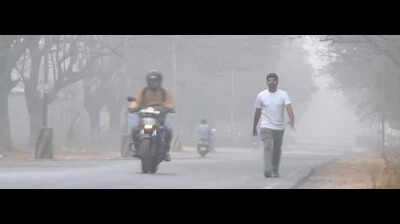
Hyderabad: With winter tightening its grip, the city is experiencing a sharper deterioration in air quality, with particulate pollution levels already higher than those of last year. Data indicates that PM2.5 concentrations surged to 176 this winter, compared to around 140 during the same period last year, while PM10 levels climbed to 185 from nearly 150 in the winter of 2024.The highest levels were recorded in Sanathnagar, Gachibowli, and Old City. The PM2.5 levels are as much as 35 times higher than the WHO’s permissible limit of 5. Similarly, PM10 levels are also as high as 37 times. Earlier this week, ozone levels in the area spiked to 196, close to three times the WHO’s recommended limit of 60. Carbon monoxide levels in Gachibowli and Patancheru also reached as high as 120, exceeding WHO guidelines by nearly 30 times.Experts attribute the spike to a combination of colder temperatures, calm wind conditions, and temperature inversion, a winter phenomenon that traps pollutants close to the ground. “Pollution levels worsened noticeably since last week’s cold wave, with hazy conditions becoming increasingly frequent. It’s tough even to leave the house. It’s smog in the morning and traffic-induced pollution during the rest of the day,” said Krishna V, a bank official from Abids.Residents are already feeling the health impact. “When I wake up in the morning, I feel a burning sensation in my throat and have difficulty breathing. I already suffer from asthma, and my doctor told me the problem is being worsened by the poor air quality,” said Lavanya K, a 39-year-old resident of Attapur.Vehicular emissions, construction dust, and the burning of waste and biomass during the winter months have further aggravated the situation. “Pollutants released from vehicles, industries, and construction sites are pushing particulate levels dangerously high. It is time to move beyond discussions and implement concrete measures such as promoting carpooling, as vehicular emissions are a major contributor to elevated PM2.5 and PM10 levels, which pose serious health risks,” said environmentalist BV Subba Rao. He also called for the installation of more air-quality monitoring stations and moving industries away from the city, stressing the need for greater environmental awareness and proactive participation from citizens.


